

The global demand for natural fragrance products is surging across perfume, body care, and wellness sectors due to their special advantages. The key components for these products are the natural aroma chemicals. They provide the authentic olfactory profiles required for premium brands to thrive in an increasingly eco-conscious global marketplace.
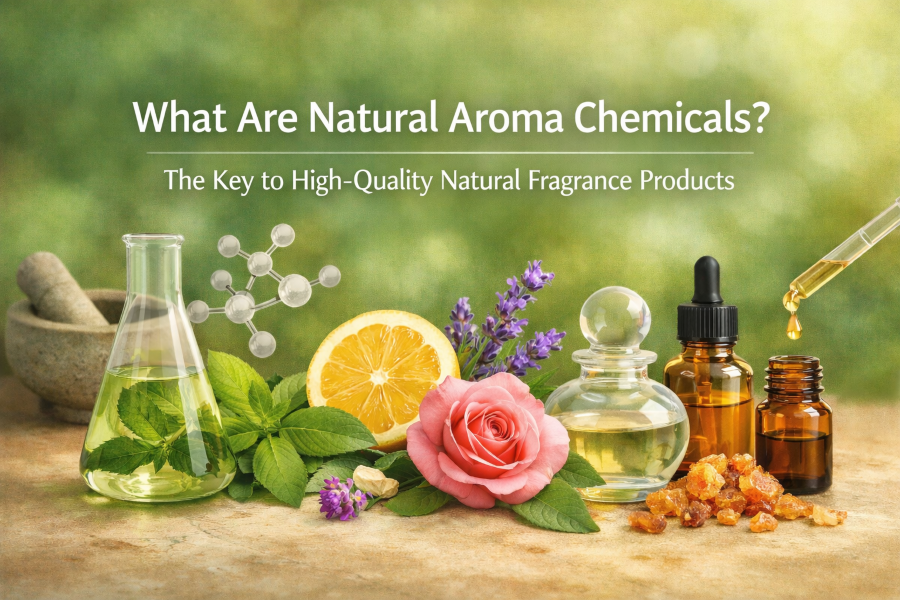
What Are Natural Aroma Chemicals?
In the professional world of perfumery and flavor chemistry, the term “natural aroma chemicals” refers to complex compounds derived entirely from natural sources such as trees, flowers, plants, and even animal secretions. These compounds are responsible for the specific scents and flavors we associate with nature.
According to the ISO 9235 standard, a true natural aroma should be 100% derived from natural raw materials. This means they are free from synthetic additives, artificial modifications, or petrochemical-derived components.
How Are Natural Aroma Chemicals Obtained?
The journey from a pine forest or a citrus grove to a pure, stable natural fragrance ingredient involves sophisticated extraction and refinement. Generally, these ingredients are obtained through two primary pathways:
l Physical and Chemical Extraction
These methods are the most established routes for harvesting aromatic compounds from flowers, stems, leaves, and resins:
Common Primary Extraction Processes:
- Steam Distillation: The most common method where steam passes through plant material, releasing volatile oils. Once cooled, the oil and water separate, allowing for the collection of the essential oil.
- Dry Distillation: Conducted without water, this process involves direct heating of dry materials (like aromatic woods or amber), often resulting in a desirable “toasted” or smoky olfactory profile.
- Solvent Extraction: Used for heat-sensitive plants like jasmine or tuberose. A solvent (like hexane) extracts a waxy “concrete,” which is then refined with ethanol to create ana
- Expression (Cold Pressing): Standardfor citrus peels, this mechanical process extracts essential oils that are highly sensitive to heat and oxidation.
- Enfleurage: A labor-intensive, traditional method using fats to absorb the scent of delicate blossoms, which is then separated using alcohol.
Common Secondary Processing Steps:
- Fractional Distillation: This process separates the complex mixture of an essential oil into individual aromatic molecules based on their different boiling points.
- Crystallization: A physical separation technique where essential oils (such as peppermint oil) are cooled to specific temperatures, causing the natural aroma chemicals—like menthol—to crystallize into high-purity solid forms.
l Biological Fermentation and Transformation
Modern biotechnology has introduced a sustainable way to produce rare aromatic substances. By utilizing natural microorganisms like bacteria, fungi, or yeast, along with specific enzymes, manufacturers can convert natural precursors or agricultural byproducts into high-value aromatic compounds.
Examples of Common Natural Aroma Chemicals
- Terpenes: Examples include limonene (citrus), linalool (soft lavender), geraniol (rose-like), and pinene (fresh pine).
- Specific Plant Isolates: Notable examples include menthol from peppermint, cinnamaldehyde from cinnamon, and eugenol from cloves.
- Aldehydes, Ketones, and Esters: Natural vanillin provides iconic warmth, while benzaldehyde offers a classic almond note. Natural esters provide the fruity “top notes” essential for vibrant compositions.
Benefits of Using Natural Aroma Chemicals in Fragrance Creation
1. Creative and Technical Advantages
For the master perfumer, natural aroma chemicals are indispensable tools. They provide the “crispness” and fidelity of a single note while allowing for the construction of incredibly complex and naturalistic accords that synthetics often fail to replicate.
High-purity isolates like isolongifolene (a key Linxingpinechem product) provide a consistent woody base, while certain naturals like sandalwood oil act as potent natural fixatives, slowing the evaporation of top notes and dramatically extending a perfume’s longevity on the skin.
2. Skin and Sensory Advantages
Beyond scent, many natural perfume ingredients offer proven therapeutic properties. Rose oil is renowned for hydrating and improving skin elasticity. Chamomile and santalol (from sandalwood) are potent anti-inflammatories, soothing irritation and redness. Terpenes like alpha-terpinene, found in tea tree and cardamom, possess well-documented antimicrobial and antioxidant effects.
From an aromatherapy perspective, linalool induces calm, while limonene is uplifting, allowing formulators to create products with functional, mood-enhancing benefits.
3. Sustainability and Environmental Aspects
Authentic natural aroma chemicals originate from renewable botanical resources and are generally biodegradable. Modern “upcycling” techniques also play a role; for example, citrus peels from the juice industry or coffee husks are now repurposed into premium aroma ingredients. This circular economy approach significantly reduces the carbon footprint of the fragrance industry and supports global biodiversity.
4. Marketing and Consumer Perception
Consumer preference is increasingly shaped by the Clean Beauty and sustainability movement. Products formulated with natural fragrance ingredients avoid controversial synthetic additives and strengthen brand transparency.
For fragrance and personal care brands, incorporating natural aroma chemicals enhances ESG positioning and enables compelling eco-luxury storytelling—an important factor driving premium product differentiation and consumer willingness to pay higher prices.
Why Choose Linxingpinechem as Your Natural Aroma Chemical Partner
At Linxingpinechem, we have specialized in pine-derived chemicals and aroma materials since our establishment in 1998. As a manufacturer rooted in one of China’s major turpentine and pine resin production regions in Guangdong Province, we benefit from direct access to high-quality natural raw materials and a stable upstream supply.
We continuously invest in advanced production infrastructure. Since 2019, we have operated automated PLC-controlled production lines with annual capacities including:
- 8,000 tons of rosin and turpentine
- 500 tons of isolongifolene
- 1,500 tons of longifolene
- Over 3,000 tons of pine chemical products
Our expertise focuses on the purification, synthesis, and customization of aroma chemicals derived from renewable forest resources. Our core product portfolio includes high-purity paracymene, paramenthane, isolongifolene, alpha/beta pinene, and natural dipentene—widely applied across the fragrance, food flavoring, pharmaceutical, and fine chemical industries.
Supported by a professional R&D team and laboratories equipped with multiple high-precision GC analytical systems, we ensure consistent quality and reliable performance for industrial-scale applications. Strict internal quality control systems allow us to deliver stable, cost-effective natural aroma chemicals trusted by customers throughout Southeast Asia, Western Europe, and the United States.
Conclusion
As the demand for authenticity and sustainability reshapes the fragrance industry, natural aroma chemicals stand as the essential elements for creating superior products. For businesses seeking a reliable partner to navigate this landscape, Linxingpinechem offers the expertise, production capacity, and product purity to bring your natural fragrance visions to life. Get in touch with Linxingpinechem to discuss how we can support your next fragrance project.