

For industrial procurement managers and chemical engineers, distinguishing between gum turpentine and wood-derived alternatives is not merely a matter of semantics but of molecular integrity. The fundamental variation lies in the source material: pure gum spirit turpentine is distilled exclusively from the oleoresin of living pine trees, ensuring high alpha-pinene content and a clean, balsamic aroma. Conversely, wood turpentine is extracted from dead stumps or as a pulp byproduct, often resulting in higher impurities and pungent odors. For sectors requiring precise stoichiometry, such as fragrance formulation or synthetic camphor production, selecting the correct turpentine gum grade is non-negotiable.
Distinct Biomass Origins and Extraction Protocols
The industrial value of terpene solvents depends heavily on their biological origin. While gum variants rely on sustainable forestry and living pine cycles, wood alternatives utilize aged biomass, leading to distinct processing pathways that fundamentally alter the final solvent quality and application potential.
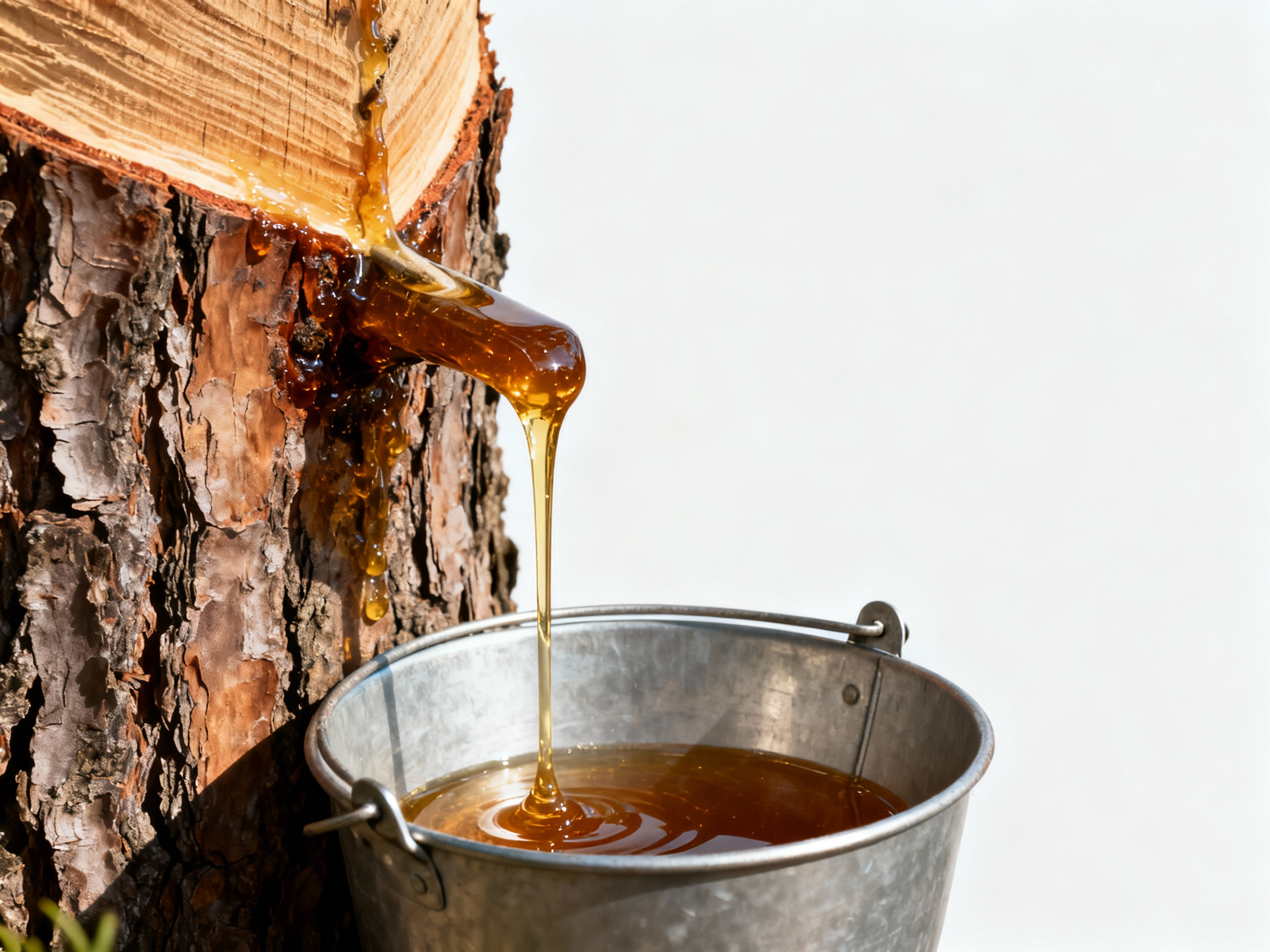
Oleoresin Tapping from Living Pinus Species
The production of high-grade gum turpentine oil begins with the careful tapping of living trees, primarily Pinus elliottii (Slash Pine) and Pinus massoniana. This method mirrors the historical extraction of georgia pine gum spirits of turpentine, which set the global benchmark for quality in the early 20th century. Workers strip a section of bark to induce the flow of oleoresin, a natural defense mechanism of the tree. This “gum” is collected seasonally, ensuring a renewable cycle that keeps the forest ecosystem intact. The resulting exudate is rich in volatile terpenes, specifically designed by nature to protect the tree, which translates into a raw material with superior chemical reactivity compared to dead wood extracts.
Steam Distillation versus Destructive Recovery
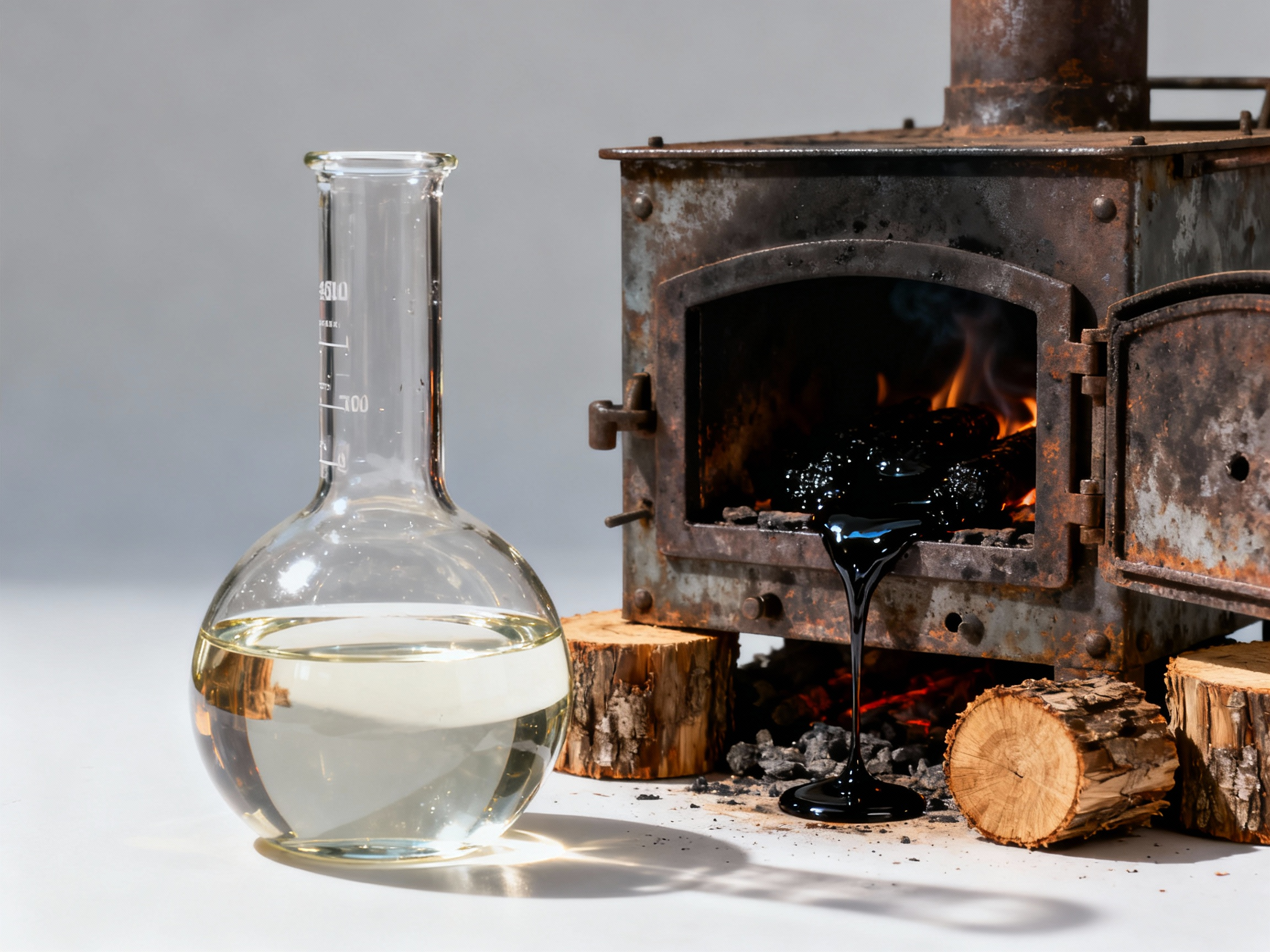
Processing methodologies further widen the gap between these solvents. Oleoresin undergoes low-temperature steam distillation, a gentle process that separates the volatile oil from the rosin without degrading delicate terpene structures. This preserves the isomer ratios essential for high-end synthesis. In contrast, wood turpentine production often involves the “destructive distillation” of aged stumps or solvent extraction using naphtha. These aggressive methods recover oil from wood saturated with degradation products. Furthermore, sulfate turpentine, a byproduct of the Kraft paper process, requires extensive desulfurization to remove mercaptans, often leaving trace sulfur residues that are unacceptable for sensitive applications like pharmaceutical precursors.
Comparative Chemical Profiles and Sensory Specifications
Beyond extraction methods, the molecular architecture defines utility. B2B formulators must distinguish between the isomer-rich profiles of living gum exudates and the complex impurity spectrums found in wood-derived oils to ensure formulation stability and olfactory compliance.
Alpha-Pinene Dominance and Isomeric Ratios
The primary differentiator in chemical analysis is the concentration of alpha-pinene. High-quality turpentine gum typically boasts an alpha-pinene content exceeding 80%, with some Pinus elliottii sources reaching 90%. This high purity is required for gum spirits of turpentine for health-related synthesis, such as the production of pharmaceutical-grade synthetic camphor and terpineol. Wood turpentine, conversely, contains significantly higher levels of dipentene, camphene, and limonene artifacts formed during the aging of the stump. While these compounds have industrial uses, they act as contaminants in reactions requiring precise alpha-pinene stoichiometry, often lowering yields in polymerization processes or altering the refractive index .
Sensory Profiles and Residual Impurities
Olfactory characteristics provide an immediate quality indicator for formulators in the flavor and fragrance industries. Pure gum spirit turpentine exhibits a fresh, balsamic, and pine-like aroma, making it a valuable middle note in functional fragrances. Wood turpentine, heavily influenced by its extraction method, often carries a penetrating, acrid, or burnt odor due to the presence of phenolic byproducts and residual extraction solvents. In coating applications, the “clean” evaporation of gum spirits prevents the retention of disagreeable odors in dried varnish films, a common defect when using lower-grade wood or sulfate turpentines.
Linxingpinechem High-Purity Terpene Manufacturing
Located in the pine-rich Jiangxi Province, Linxingpinechem leverages superior forestry resources to produce premium gum turpentine oil. Our facility prioritizes sustainable tapping and advanced fractionation to meet rigorous international standards for pharmaceutical and chemical synthesis, ensuring consistent isomer profiles.
Sustainable Supply Chain for Global Synthesis
We understand that B2B procurement demands reliability. Linxingpinechem integrates backward integration into our supply chain, overseeing the resin collection process to ensure ethical forestry practices. Unlike wood turpentine production, which relies on a finite supply of stumps, our living-tree tapping method ensures a renewable, long-term supply of turpentine gum. We provide detailed Certificates of Analysis (COA) and gas chromatography reports for every batch, allowing chemical engineers to validate the terpene profile before integration. Our logistical capabilities ensure stable export volumes to the Americas, supporting industries ranging from agrochemicals to high-end paints.
Conclusion
While wood-derived solvents offer a low-cost alternative for basic thinning, they lack the chemical uniformity of gum-derived spirits. The superior alpha-pinene content and clean sensory profile of gum turpentine make it the essential choice for sophisticated chemical synthesis. For formulators seeking consistency, Linxingpinechem delivers the purity your process requires.