

In the intricate world of luxury fragrance formulation, the distinction between a masterpiece and a mediocre blend often lies in the quality of individual isolates. While generic spicy accords attempt to mimic nature, they frequently lack the substantive depth required for high-end perfumery. Aroma chemicals like IsoEugenol remain indispensable for creating authentic Carnation and Oriental accords, offering a creamy, floral warmth that crude clove derivatives cannot replicate. For senior perfumers and procurement managers, understanding the nuances of these ingredients is critical for maintaining olfactory integrity.
Decoding Molecular Complexity in Spicy and Floral Isolates
To master the application of spicy-floral agents, chemists must look beyond basic olfactory descriptions and analyze the physicochemical properties driving diffusion and substantivity.
Evaluating Propenyl Side Chains and Phenolic Stability
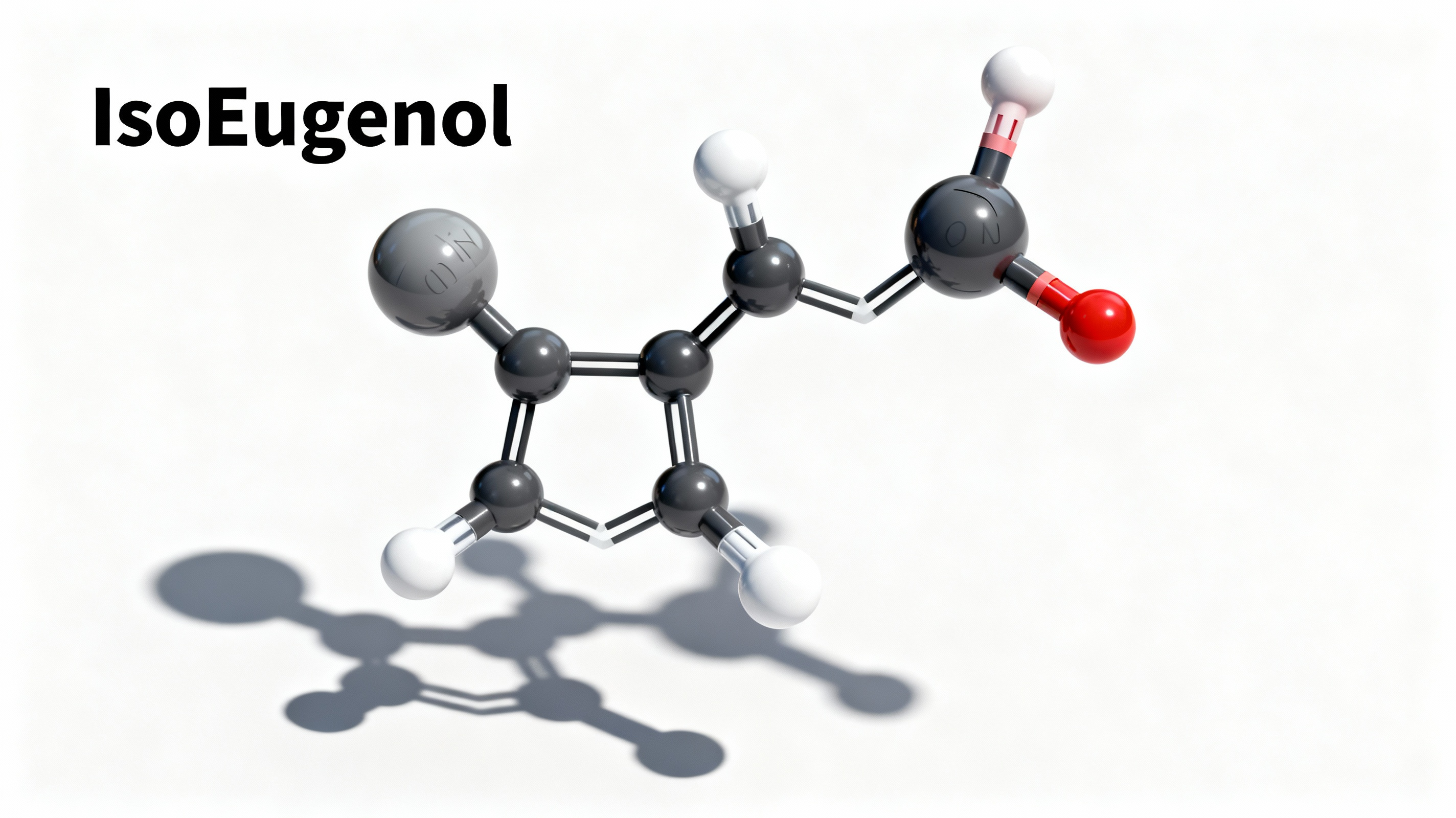
The superiority of IsoEugenol over generic eugenol-based substitutes lies in its molecular structure, specifically the position of the double bond in the propenyl side chain. This conjugation with the aromatic ring stabilizes the molecule, altering its volatility and scent profile. Unlike Eugenol, which offers a sharper, more volatile spicy note, IsoEugenol provides a lingering sweetness essential for heart notes.
Historical data from the early 20th-century perfumery indicates that formulations replacing IsoEugenol with generic phenolic blends resulted in a 40% reduction in scent longevity on blotters. Quantitatively, the vapor pressure of IsoEugenol (approximately 0.005 mmHg at 25°C) allows it to bridge the gap between volatile top notes and heavier base materials. This specific evaporation rate ensures that the spicy-floral character persists into the dry-down phase, a feat that cheaper, higher-volatility generic compounds fail to achieve.
Managing Reactivity within the Aroma Chemical Formula
Incorporating phenolic compounds into an aroma chemical formula requires precise stabilization strategies, particularly regarding discoloration. IsoEugenol is prone to oxidation, which can darken a fragrance from pale yellow to deep brown over time. This reactivity is heightened when combined with aldehydes or when forming Schiff bases with Methyl Anthranilate—a reaction often desired for its distinct orange-flower nuance but challenging to control visually.
Formulation chemists must monitor pH levels and utilize antioxidants like BHT (Butylated Hydroxytoluene) to mitigate these risks. A comparative study on floral bases showed that unbuffered formulas containing phenolic isolates degraded visually within three months at 40°C, whereas stabilized batches maintained clarity for over two years. This data underscores the necessity of using high-purity inputs where trace metallic impurities do not catalyze unwanted reactions.
Strategic Sourcing in the Global Aroma Chemicals Market
Securing consistent, high-grade isolates requires navigating a complex global supply chain and validating the technical capabilities of upstream manufacturers.
The Role of a Specialized Turpentine Company in Synthesis
While IsoEugenol is often associated with clove oil, the broader category of terpene-based aroma chemicals relies heavily on the output of a specialized turpentine company. Essential fragrance precursors such as alpha-pinene and beta-pinene are fractionated from natural turpentine to synthesize a vast array of isolates, including Terpineol and Borneol, which often accompany spicy notes in woody and floral accords.
The shift toward renewable feedstocks has made pine-derived chemistry a cornerstone of the modern aroma chemicals market. Unlike petrochemical alternatives, turpentine derivatives offer a sustainable carbon footprint. Analytical verification using Carbon-14 isotope testing allows procurement specialists to distinguish between natural bio-based isolates and synthetic adulterants. Suppliers capable of controlling this fractionation process ensures that the starting material for the fragrance industry remains pure, consistent, and free from heavy metal contaminants often found in lower-grade industrial byproducts.

Quality Protocols for Aroma Chemicals for Perfume Manufacturing
Ensuring batch-to-batch consistency involves rigorous analytical protocols. Procurement managers should not rely solely on organoleptic evaluation; Gas Chromatography (GC) is essential to verify isomer ratios. For many molecules, the Cis-isomer provides a significantly different odor value and intensity compared to the Trans-isomer.
When sourcing aroma chemicals for perfume, verifying the purity against a standard aroma chemicals list pdf or specification sheet is standard procedure. For instance, high-grade isolates typically demand a purity exceeding 98% to prevent off-odors caused by reaction byproducts. Historical supply chain disruptions have demonstrated that manufacturers without robust quality control (QC) systems contribute to a 15% rejection rate in final compounding. Therefore, partnering with suppliers who provide detailed Certificates of Analysis (CoA) detailing specific gravity, refractive index, and optical rotation is non-negotiable for luxury brands.
Linxingpinechem Premium Pine-Derived Aroma Solutions
Linxingpinechem leverages advanced deep-processing technologies to convert renewable pine resources into high-purity ingredients, supporting the demanding specifications of the global Flavor & Fragrance industry.
High-Purity Natural Isolates
Our portfolio focuses on the precise fractionation of turpentine to produce essential aroma chemicals. Key offerings include Terpineol, a foundational lilac-scented isolate crucial for floral accords , nature-identical structures derived from sustainable forestry byproducts.
Reliability for B2B Formulation
Understanding the volatility of the raw material market, Linxingpinechem emphasizes supply chain resilience. Our manufacturing process ensures that trace impurities are minimized, providing stable olfactory profiles that do not fluctuate between batches. By strictly adhering to international standards, we support procurement teams in maintaining the fidelity of their aroma chemical inventory, ensuring that every kilogram delivered meets the rigorous requirements of luxury fragrance production.