

Global industries are increasingly shifting toward high-performance, plant-based solvents that offer both chemical stability and environmental compliance. Terpineol, a naturally derived monoterpene alcohol obtained from the deep processing of pine turpentine, stands at the forefront of this transition. For procurement managers and chemical engineers, understanding the specific isomeric profiles—such as alpha-terpineol and 4-terpineol—is essential for optimizing product formulations. Linxingpinechem (Linxing Pine Chemical) provides high-purity terpineol solutions that meet the rigorous demands of electronic paste manufacturing, pharmaceutical synthesis, and precision cleaning, delivering consistent results where petrochemical alternatives often fail.
Optimizing Electronic Pastes and Precision Cleaning with Alpha-Terpineol
High-grade terpineol serves as a superior organic vehicle in electronic manufacturing, offering precise viscosity control and efficient residue removal for delicate components. Its high boiling point ensures stability during high-temperature processing.
Rheological Control in Photovoltaic and Circuit Printing
In the production of conductive silver pastes for solar cells and printed circuit boards (PCBs), the evaporation rate and viscosity of the solvent vehicle are critical. Alpha-terpineol uses in this sector rely on its boiling point of approximately 217°C to 219°C, which allows for controlled drying during the sintering process. Unlike volatile solvents that evaporate too quickly, causing surface defects, alpha-terpineol maintains a stable paste rheology.
Recent industry data indicates that silver pastes formulated with a solvent mixture containing 49.5 wt% alpha-terpineol exhibit superior thixotropic recovery. When sintered at temperatures around 140°C, these pastes achieve electrical resistivity as low as 7.72 × 10⁻⁶ Ω·cm. This level of conductivity is vital for maximizing the efficiency of photovoltaic cells. Furthermore, the high solvency power of a terpineol ensures that organic binders like ethyl cellulose are fully dissolved, preventing agglomeration and ensuring a smooth, defect-free print line on ceramic or glass substrates.
Flux Removal and Material Compatibility in PCB Manufacturing
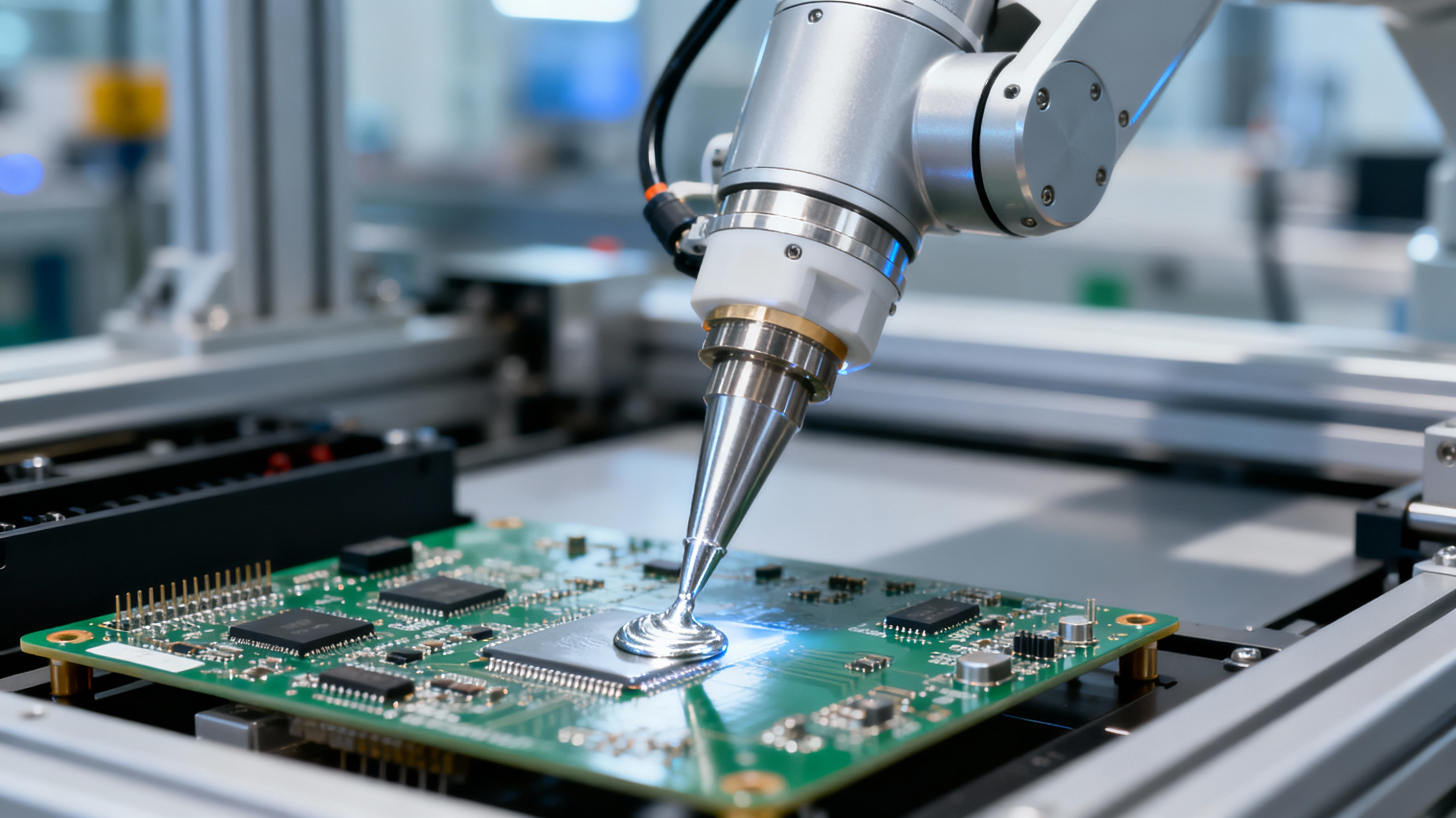
Beyond formulation, terpineol is indispensable in the post-assembly cleaning of PCBs. Its non-corrosive nature makes it ideal for removing rosin flux residues without damaging sensitive plastic components or fine metal circuitry. In precision cleaning applications, solvents must possess low surface tension to penetrate tight spaces under surface-mount components.
Comparative studies show that terpineol-based cleaners effectively dissolve polymerized flux residues that water-based cleaners struggle to remove. For high-reliability electronics, where ionic contamination can lead to short circuits, the high purity of the solvent is paramount. Linxingpinechem’s terpineol minimizes moisture content, reducing the risk of corrosion and ensuring that the insulation resistance of the final PCB assembly remains high. This capability is particularly crucial in the aerospace and automotive sectors, where component failure is not an option.
Therapeutic Efficacy and Agricultural Applications of Terpene Alcohols
The biological activity of terpene alcohols extends their utility into pharmaceuticals and agriculture, where specific isomers drive antimicrobial efficacy and mineral recovery rates.
Understanding 4-Terpineol in Clinical and Topical Formulations
Procurement professionals in the pharmaceutical sector often ask, “what is 4 terpineol?” Also known as Terpinen-4-ol, it is a specific isomer distinct from alpha-terpineol, renowned for its potent antimicrobial properties. While alpha-terpineol provides a pleasant lilac aroma and acts as a penetration enhancer, 4-terpineol is often the active agent in antiseptic formulations.
Clinical research highlights the terpineol terpene effects on pathogenic bacteria. Studies have demonstrated that 4-terpineol exhibits Minimum Inhibitory Concentrations (MIC) ranging from 0.6% to 1.25% against Staphylococcus aureus and Escherichia coli. Furthermore, synergistic formulations combining alpha-terpineol and 4-terpineol have shown enhanced efficacy against antibiotic-resistant strains. This makes high-purity terpineol fractions valuable intermediates in the synthesis of topical analgesics, antifungal creams, and advanced transdermal drug delivery systems, where they facilitate the absorption of active pharmaceutical ingredients through the skin barrier.

Mineral Flotation and Crop Protection Efficiencies
In the mining industry, terpineol acts as a high-efficiency frother for the flotation of non-ferrous metals. Its molecular structure creates stable, small-diameter bubbles that selectively attach to hydrophobic mineral particles. In complex sulfide ore processing, using terpineol-based frothers can significantly improve recovery rates.
Field data suggests that optimizing the collector-frother system with terpineol can boost copper recovery to over 87%, producing concentrates with copper grades exceeding 20%. This efficiency reduces the loss of valuable minerals to tailings. Similarly, in bio-agriculture, terpineol is gaining traction as a botanical pesticide. Its volatility and toxicity profiles are favorable for targeting soft-bodied insects while remaining biodegradable, aligning with the “Green Chemistry” standards required for modern organic farming inputs.
High-Purity Terpineol Solutions by Linxingpinechem
Linxingpinechem (Linxing Pine Chemical) leverages decades of deep processing expertise to deliver premium terpineol derived from natural gum turpentine. By utilizing advanced hydration and distillation technologies, the company produces distinct grades tailored for sensitive applications, including Perfumery & Medical Use terpineol with purity levels exceeding 95%.
Unlike generic industrial grades, Linxingpinechem’s terpineol ensures a consistent isomeric profile, characterized by its colorless appearance and stable physical properties (Density ~0.93–0.96 g/cm³). This reliability allows manufacturers to stabilize their supply chains, ensuring that every batch of electronic ink or pharmaceutical formulation performs predictably. Whether you require bulk quantities for mineral flotation or high-purity fractions for delicate synthesis, Linxingpinechem offers scalable solutions backed by rigorous quality assurance.