

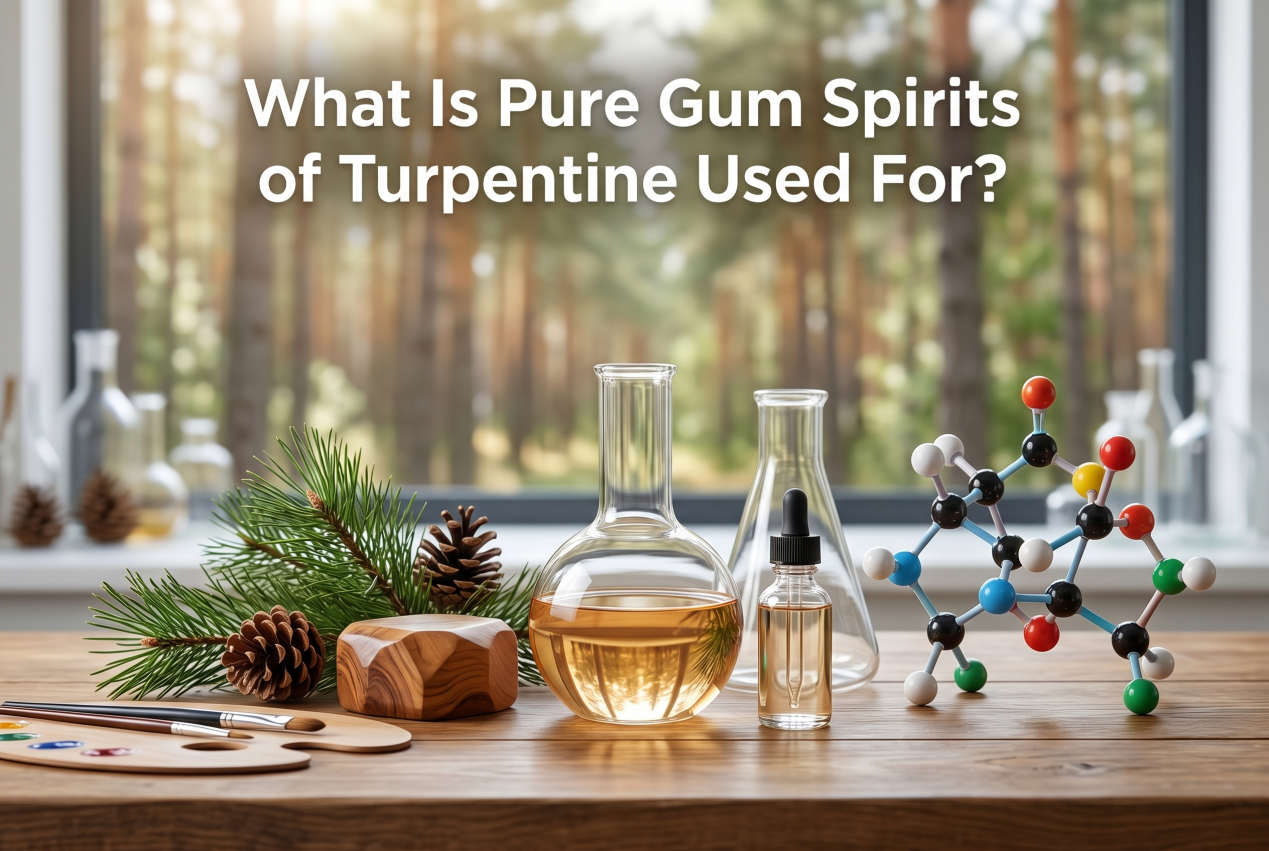
What is pure gum spirits of turpentine used for? Pure gum spirits of turpentine is commonly used as a traditional solvent, cleaning and thinning agent, furniture-care ingredient, and natural feedstock for producing fragrance chemicals and other industrial materials. Distilled from pine resin rather than petroleum, it remains valuable in applications where solvent performance, pine-derived composition, and compatibility with established formulations are important.
How to Make Pure Gum Spirits of Turpentine
The production process begins with oleoresin collected from suitable pine trees. Producers carefully tap the trees so that the resinous material flows into collection containers. The harvested oleoresin contains both volatile turpentine and nonvolatile rosin components.
After collection, the material is normally filtered or otherwise prepared to remove bark, dirt, water, and other impurities. It is then processed by distillation, commonly using steam.
During distillation, the volatile fraction vaporizes and is separated from the heavier rosin. Once the vapor is condensed, it becomes gum turpentine, while gum rosin remains as the nonvolatile portion. One tonne of gum oleoresin may yield approximately 100–200 liters of turpentine, although actual output varies according to the pine species, resin quality, and production method.
The main natural components of turpentine are monoterpenes, especially alpha-pinene and beta-pinene. Other possible constituents include limonene, camphene, and delta-3-carene. Exact composition depends on the pine species, geographical source, resin age, and refining conditions.
These terpene compounds explain why pine gum turpentine functions as both a solvent and an upstream chemical raw material.
What Is Pure Gum Spirits of Turpentine Used For?
What is pure gum spirits of turpentine used for? The answer depends on the required formulation and industry. Its four major application areas include arts and crafts, woodworking, industrial manufacturing, and fragrance production.
1. Arts and Crafts Production
Artists have traditionally used gum turpentine to thin oil paints, modify paint consistency, dissolve certain natural resins, and prepare some varnish formulations.
In practical studio use, it may help artists:
- Thin oil-based colors during early painting stages
- Clean suitable brushes and tools
- Dissolve compatible resins
- Adjust the flow of oil-paint mixtures
- Prepare certain traditional painting media and varnishes
2. Carpentry and Furniture Restoration
In carpentry and furniture care, pure gum spirits of turpentine may be used as a solvent in traditional waxes, polishes, oil finishes, and varnish-related preparations.
Depending on the finish and formulation, it can help:
- Dilute certain oil-based coatings or wood finishes
- Dissolve waxes used in furniture-care products
- Remove pine resin, oily residue, or old polish
- Clean compatible tools after finishing work
- Improve the spreadability of traditional wax-and-oil mixtures
3. Industrial and Chemical Manufacturing
Industrial users value pure gum spirits of turpentine as both a specialized organic solvent and a source of reactive terpene compounds. It is widely used during the production of coatings, adhesives, sealants, cleaning products, waxes, rubber-based materials, and specialty resins, where its excellent solvency and natural chemical properties support a wide range of manufacturing processes.
Beyond its role as a solvent, turpentine is also an important raw material for the chemical industry. Its major components, including alpha-pinene and beta-pinene, can be separated or chemically converted into higher-value products. These terpene compounds are widely used to manufacture fragrances, flavors, vitamins, insecticides, polyterpene resins, and other specialty chemicals.
4. Perfumery and Fragrance Industry
Pure gum spirits of turpentine plays an important upstream role in fragrance manufacturing. Rather than being added directly to every finished perfume, it is often processed to obtain terpene fractions or used as a starting material for producing aroma chemicals.
Alpha-pinene and beta-pinene can be separated through fractional distillation and converted into fragrance materials with pine, citrus, floral, woody, or fresh odor profiles. Turpentine-derived materials may include terpineol and other ingredients used in perfumes, household products, soaps, cosmetics, detergents, and industrial fragrances.
At Linxingpinechem, our pine chemical portfolio includes materials such as alpha-pinene, beta-pinene, terpineol, longifolene, isolongifolene, isolongifolanone, p-cymene, dipentene, and delta-3-carene. These products support customers in fragrance, coating, chemical, and related manufacturing sectors.
Safety and Precautions for Using Pure Gum Spirits of Turpentine
Pure gum spirits of turpentine is flammable and must be handled with appropriate ventilation, protective equipment, and storage controls. Its vapors should not be allowed to accumulate in enclosed work areas.
The U.S. National Institute for Occupational Safety and Health identifies inhalation, skin absorption, ingestion, and eye or skin contact as potential exposure routes. Reported effects include irritation of the eyes, skin, nose, throat, and respiratory system, as well as headaches, dizziness, and more serious effects following substantial exposure.
Users should:
- Work in a well-ventilated area
- Wear chemical-resistant gloves and suitable eye protection
- Keep containers tightly closed when not in use
- Store the product away from flames, sparks, heat, and strong oxidizers
- Avoid breathing concentrated vapor
- Wash exposed skin promptly
- Keep it away from children and pets
- Follow the supplier’s safety data sheet and local regulations
Pure gum spirits of turpentine should never be swallowed or used internally as a home remedy. Medicinal or internal use can be dangerous and should not be attempted without guidance from a qualified medical professional and an appropriately approved product. If ingestion occurs, seek medical attention immediately rather than inducing vomiting.
Explore Pine Chemical Products from Linxingpinechem
For fine chemical enterprises, pharmaceutical producers, and global chemical distributors seeking dependable raw materials, Linxingpinechem is your trusted, long-term manufacturing partner. Situated strategically in the heart of China’s major pine production regions, we specialize in the advanced, sustainable deep-processing of superior forest chemicals.
Our high-purity gum turpentine is extracted through state-of-the-art distillation facilities, yielding exceptional concentrations of essential pinenes. We take immense pride in our rigorous quality control protocols, ensuring our natural extracts continuously meet the exacting performance standards required by the global food, flavor, and pharmaceutical industries.
By prioritizing sustainable tapping methods and precision engineering, we deliver raw materials that seamlessly integrate into your complex production lines, enhancing your final product quality.
Conclusion
In conclusion, pine gum turpentine is far more than a simple solvent; it is a vital, natural precursor that drives innovation across fine arts, woodworking, and complex synthetic perfumery. Understanding its proper applications and mandatory safety guidelines is absolutely essential for maximizing its potential within your industrial formulations.
If your business demands consistent, premium pine-derived chemicals, we are uniquely positioned to support your growth. Contact Linxingpinechem today to explore our product specifications and discover how our forest chemicals can elevate your product lines and manufacturing efficiency.