

A lilac note in a bar of soap and a solvent inside a can of touch-up paint rarely get traced back to the same raw material, yet both often start with the same monoterpenoid alcohol. At Linxingpinechem, we produce terpineol oil from turpentine sourced in the pine-growing regions surrounding our own facility, and the compound’s reach across fragrance, industrial, and even pesticide formulations comes down to a handful of properties worth understanding before it lands on a spec sheet. None of those properties are exotic on their own; what sets a usable batch of terpineol apart from an inconsistent one is how tightly they hold together from one shipment to the next.
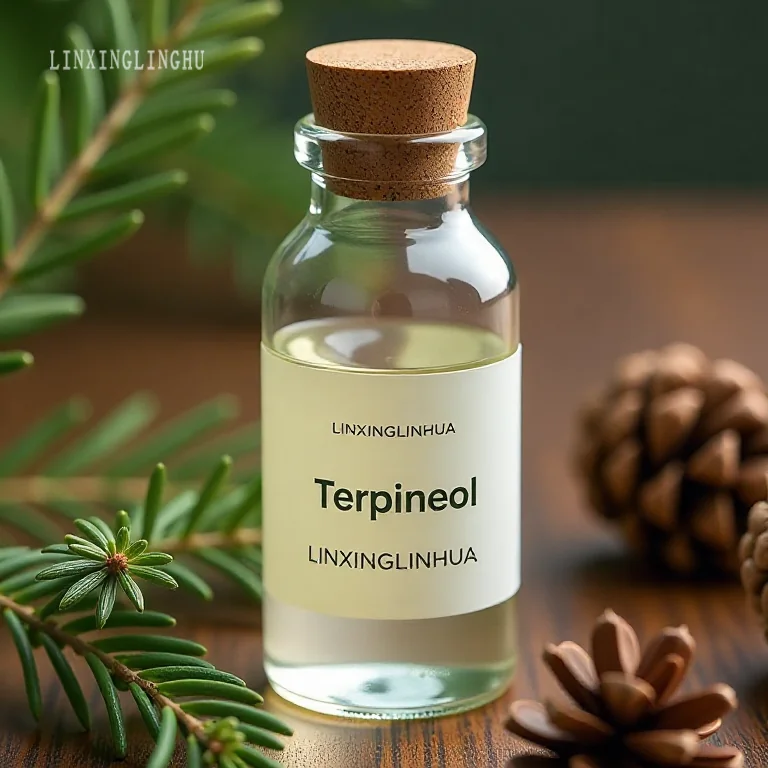
The Alpha-Terpineol Backbone Behind That Signature Lilac Note
Commercial terpineol is not a single molecule but a mixture of closely related isomers, and the one doing most of the olfactory work is alpha-terpineol. It carries the clean, floral, distinctly lilac character that formulators reach for when building soap perfumes and fine-fragrance accords, a smell profile stable enough to survive alkaline soap bases where many other floral alcohols lose their character.
Our terpineol leans on that same alpha terpineol content to deliver a consistent lilac impression batch after batch, which matters more than it might seem: a fragrance house rebuilding a lilac or lily-of-the-valley accord needs the raw material’s olfactory signature to stay put, not drift between deliveries. Perfumers also value the isomer as a building block rather than an endpoint; esterifying it yields terpinyl acetate, a related fragrance material with its own bergamot-like facet, and the parent alcohol shows up as a bridging note in fougère and citrus-forward compositions where it links volatile top notes to a floral or woody heart.
Physical Constants That Keep Formulation Behavior Predictable
Our terpineol carries a molecular formula of C10H18O and a molecular weight of 154.249, with a CAS number of 8000-41-7 that ties every shipment to an unambiguous identity on paper.
On the bench, the material shows a relative density of 0.9±0.1 g/cm3, a boiling point of 217.5°C at 760 mmHg, a melting point in the 31 to 35°C range, and a refractive index of 1.483. These numbers are not just abstract data—they form the basis for consistent processing. For instance, the melting point sits close to room temperature, so the product may arrive as a soft solid or a viscous liquid depending on ambient conditions. Formulators working with it need to know that range in advance, rather than guessing how a drum will behave once it reaches the plant floor.
Our quality team checks each of these figures against the certificate of analysis before a batch ships, since a refractive index or density reading outside range is often the first sign that a shipment has picked up moisture or drifted in isomer ratio.
A Multi-Industry Ingredient Beyond Fragrance
Fragrance and flavor work is where terpineol gets the most attention, showing up in perfumes, soaps, detergents, and essence preparation, but the same compound does real work outside a scent lab. It functions as an advanced solvent, lending a refreshing aroma to deodorants while dissolving other ingredients cleanly. In medicine and agriculture, terpineol’s properties have made it a useful component of eco-friendly pesticide formulations.
Manufacturers of plastics, inks, and specialty soaps draw on it as well, and it plays a specific role as a color solvent in glassware production, helping colors set and hold on glass surfaces, a use case that has carried over into instrumentation and telecommunications equipment where similar solvent behavior is needed. Few raw materials cross that many industries without some compromise in performance, which is part of why terpineol has held its position across so many supply chains for as long as it has.
Purity, Packaging, and Supply Consistency From Linxingpinechem
A raw material’s usefulness depends on how it travels, not only on what it does once it arrives. We pack our terpineol in brand-new 200L or 235L galvanized iron barrels, each holding a net weight of either 175kg or 190kg, and we take care during transportation to keep water and contaminants out and avoid the kind of collision damage that compromises a barrel’s seal. Storage guidance follows the same logic: we recommend keeping the product indoors or in a cool, dry, well-ventilated space, away from fire sources, direct sunlight, and extreme heat, conditions that protect both the compound’s physical stability and its fragrance character until it reaches a customer’s own production line.
Behind that packaging stands over two decades of production experience: Yunfu Linxing Pine Chemicals has operated pine-chemical facilities in Guangdong Province since 1998, with a combined annual output of terpineol and pine oil 1,000 metric tons, alongside its broader lines of pinene, longifolene, and paracymene. The company supplies food, coatings, pharmaceutical, flavor, and fragrance industries under a single quality management system, rather than maintaining separate grade standards for different customer segments. A team of more than 50 staff members—including an in-house research group—supports the operation of that system, with quality control embedded throughout the production cycle rather than addressed only at the final stage.
Formulators evaluating terpineol suppliers tend to weigh four factors at once: an olfactory profile that holds its lilac character, physical constants that remain consistent from shipment to shipment, a breadth of industrial applications that justifies keeping the material on hand, and packaging and storage practices that protect all of these attributes in transit. Taken together, these points form the basis of our proposition at Linxingpinechem for why our terpineol deserves a place on a formulator’s approved supplier list—and we prefer to present that case directly rather than relying on a spec sheet alone.