

Buying Terpineol on the basis of its name alone can leave important technical questions unanswered. A reliable evaluation needs to establish the material’s identity, measurable physical properties, source, intended use, and handling requirements. For industrial buyers, these details provide a practical basis for comparing supplied material against internal specifications.
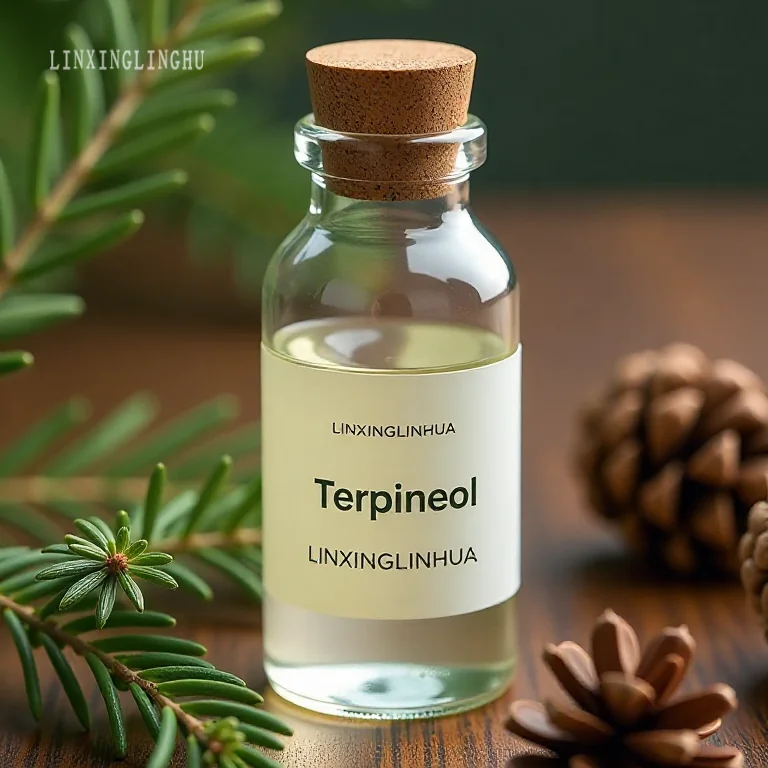
Rather than treating “standards” as one universal specification, buyers should examine the documented parameters attached to the particular grade. At Linxingpinechem, we identify our Terpineol as CAS No. 8000-41-7, with molecular formula C10H18O and molecular weight 154.249. These identifiers establish a useful starting point for product verification.
What Terpineol Standards Need to Establish
A commercial chemical specification normally serves as a reference for checking whether supplied material corresponds with the product being purchased. Identity information is therefore fundamental. CAS number, molecular formula, and molecular weight help distinguish the material from other terpene-based products that may have similar commercial descriptions.
Physical characteristics add another layer of verification. We publish values for relative density, boiling point, melting point, and refractive index. Together, these measurements give purchasers a more complete technical picture than a product name or general application description can provide.
The distinction between a supplier specification and a formal regulatory standard also deserves attention. A published product specification should not automatically be interpreted as certification for every end-use sector or market. Customers should compare available technical documentation with the requirements governing their own formulation and destination market.
Reading the Main Specification Parameters
The published specification lists relative density (D20/4) at 0.9±0.1 g/cm³, a boiling point of 217.5°C at 760 mmHg, a melting point of 31–35°C, and a refractive index (N20) of 1.483.
Each parameter describes a different physical characteristic. Relative density provides a reference for the material’s density under the stated conditions. Boiling point indicates the temperature associated with vaporization at the specified pressure, while refractive index can serve as a useful physical property for product identification and consistency checks.
Melting point is particularly relevant to storage and handling. A material with a stated melting range of 31–35°C may respond differently to temperature conditions above or below that range. Buyers therefore benefit from reviewing the specification together with the supplier’s storage guidance instead of treating physical-property values as isolated numbers.
For Terpineol oil, such measurements can help procurement teams establish a more objective comparison between documentation and incoming material. They can also provide a common technical reference when discussing requirements with suppliers.
Why the Raw-Material Source Matters
Source information adds context to the specification. We at Linxingpinechem state that our Terpineol is sourced predominantly from turpentine, an organic substance derived from pine trees. The supplier describes turpentine as a mixture of terpenes occurring predominantly in coniferous trees.
That origin is relevant for buyers specifically seeking pine-derived chemical raw materials. It connects the product with the broader pine-chemical value chain while still leaving the specification responsible for defining the material actually supplied.
Production source should not be used as a substitute for technical verification. Two materials described using similar commercial terminology should still be assessed through their documented identity and physical properties. This is particularly useful where formulation requirements are sensitive to consistency.
Matching Specifications to Intended Use
Terpineol has a broad range of listed uses. The supplied reference describes applications in fragrance and flavor, solvents and deodorants, plastics, soaps, inks, and glassware color solvents.
For buyers researching Alpha Terpineol uses, application research should therefore begin with the actual technical requirement rather than assuming that every Terpineol product is interchangeable. Fragrance-oriented purchasing, for example, may require attention to characteristics relevant to the intended formulation, while an industrial solvent application may emphasize different physical requirements.
Application descriptions provide useful direction, but they do not replace a customer-specific specification. The final selection should be based on the properties documented for the supplied grade and the requirements of the finished product.
What Packaging and Storage Reveal
Packaging is another part of practical specification review. The supplier states that its Terpineol is packed in new 200 L or 235 L galvanized iron barrels, with net weights of 175 kg or 190 kg depending on the selected packaging size. Transportation precautions include preventing water ingress or contamination and avoiding severe collision.
Storage guidance calls for indoor or cool, dry, sufficiently ventilated conditions. The product should be protected from fire sources, direct sunlight, and extreme heat.
These details matter because procurement does not end when a specification is approved. Packaging, transportation, and storage instructions affect how the material reaches and remains at the customer’s facility.
Turning a Specification Into a Purchasing Decision
A practical review can begin with identity, continue through physical properties, and finish with application and handling requirements. We provide these categories of information on our Terpineol product page, giving buyers a reference for initial technical assessment.
The next step is to compare those published parameters with the customer’s own purchasing specification. Any additional requirement should be confirmed directly through appropriate technical documentation rather than inferred from general product descriptions.
For procurement teams, the value of Terpineol standards lies in making the purchasing decision measurable. Identity confirms what is being considered; physical properties describe the material; source information establishes its origin; and packaging and storage guidance address practical handling. Together, these elements create a clearer basis for evaluating whether a particular supply is appropriate for the intended process.
A sound Terpineol purchasing decision therefore depends on more than finding a material with the right name. Our published information shows how identity, specification values, source, applications, packaging, and storage can be reviewed as connected parts of one technical assessment. For customers, that approach makes supplier discussions more precise and helps keep material selection aligned with actual application requirements.