

In the intricate world of flavor and fragrance compounding, chemists and procurement professionals are constantly searching for stable, high-performance ingredients that provide depth without overpowering a formulation. As sustainability becomes a core mandate across the chemical industry, natural isolates and their derivatives have taken center stage. Among the most valuable of these compounds is isolongifolene, a versatile sesquiterpene derived from natural pine chemistry. Known for its exceptional structural stability and rich olfactory profile, this compound is primarily used as a woody fragrance raw material and as an intermediate for selected aroma chemicals. Understanding the precise chemical properties and wide-ranging uses of this terpene derivative is essential for formulators aiming to create long-lasting, sophisticated, and environmentally responsible products.
Chemical Properties and Synthesis
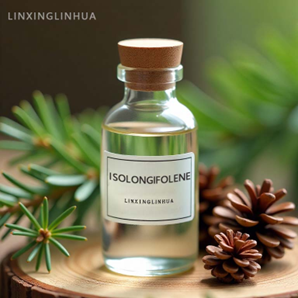
To appreciate the applications of this compound, one must first understand its molecular architecture and origin. It is a bicyclic sesquiterpene with the chemical formula C15H24 and a molecular weight of 204.35 g/mol, officially registered under CAS NO. 1135-66-6. In its pure, industrial grade, it presents as a colorless to pale yellow, transparent oily liquid. It is practically insoluble in water but highly soluble in organic solvents and alcohols, making it exceptionally easy to integrate into complex liquid formulations.
The synthesis of this specialized molecule is deeply tied to the processing of raw forestry materials. The chemical journey begins with crude turpentine, which is extracted from pine tree oleoresin. Through advanced thermodynamic separation, primarily distilling turpentine under vacuum conditions, manufacturers isolate longifolene. This naturally occurring precursor is then subjected to a rigorous catalytic isomerization process. By applying specialized acid catalysts under controlled thermal conditions, the longifolene structure undergoes a molecular rearrangement to form the more thermodynamically stable isomer. This complex synthesis requires advanced engineering to ensure the final product maintains a specific relative density (0.927 to 0.935 at 20°C) and a precise refractive index(1.4940 to 1.5000).
Foundational Base Notes in Fine Perfumery
The primary and most celebrated application for this sesquiterpene lies within the fine fragrance industry. Olfactorily, the compound is defined by a distinctive, soothing, and dry woody aroma, often described as having subtle earthy, amber, and camphoraceous undertones. Its woody odor profile allows it to be evaluated as a base material in selected perfume compositions.
When perfumers construct a fragrance pyramid, they rely on heavy, slowly evaporating molecules to form the foundation of the scent. This compound’s low volatility makes it an ideal candidate. It blends seamlessly with a wide spectrum of aromatic families, particularly complementing woody, oriental, spicy, and heavy floral compositions. By acting as a structural anchor, it adds a layer of depth and warmth that evolves elegantly on the skin over several hours, providing the sophistication expected from premium fragrance brands.
Superior Fixative Properties in Fragrance Formulation
Beyond simply contributing its own pleasant aroma, the true technical value of this molecule lies in its functional performance as a fragrance fixative. In physical chemistry, a fixative is an agent characterized by a low vapor pressure and a high boiling point (typically around 255°C for this compound). When integrated into a liquid fragrance concentrate, it interacts with highly volatile top and middle notes—such as light citrus monoterpenes or delicate floral esters.
Instead of allowing these lighter molecules to rapidly evaporate into the atmosphere upon application, its relatively low volatility may help modify the evaporation profile of more volatile fragrance components. This synergistic effect effectively prolongs the overall lifespan and tenacity of the entire fragrance. In suitable formulations, it may help support fragrance persistence, depending on dosage and the other materials used, preventing the fragrance from flattening out or degrading prematurely on the skin.
Downstream Chemical Synthesis and Industrial Applications
While fine perfumery dominates its usage, the robust chemical stability of this isomer makes it an invaluable intermediate for synthesizing even more complex aroma chemicals. Isolongifolene can undergo further reactions to produce derivatives such as isolongifolanone, a separate woody aroma chemical. These derivatives may provide woody or amber odor characteristics for selected fragrance formulations.
Furthermore, its excellent resistance to oxidation and chemical degradation allows it to perform reliably in demanding industrial environments. It is utilized as a stable fragrance additive in heavy-duty household detergents, industrial cleaners, fabric softeners, and air space sprays. Its chemical stability may make it suitable for selected soaps, detergents, fabric softeners, cleaners, and air-care formulations. Final performance should be evaluated according to the formulation, dosage, and required stability tests.
Strategic Sourcing and Manufacturing Excellence
Securing a reliable supply of this highly refined sesquiterpene requires partnering with a manufacturer that possesses deep expertise in pine chemistry. Producing consistent, fragrance-grade batches demands precise control over the catalytic isomerization process to eliminate trace impurities that could introduce off-odors. At Linxingpinechem, we produce isolongifolene through the catalytic isomerization of longifolene and supply it with defined specifications and quality documentation. Sourcing from technologically advanced, vertically integrated facilities is the most effective way to secure a stable, long-lasting formulation supply chain.