

As industries keep pursuing more efficient and sustainable chemical workflows, market demand for versatile, high-quality intermediates and initiators has grown considerably. For manufacturers spanning polymer production to specialty fragrance segments, sourcing dependable raw materials stands as a key operational priority. Obtained from the deep-processing of natural turpentine, p-Menthane Hydroperoxide has gained traction as a valuable component across a broad range of industrial use cases.
This versatile compound can serve as a useful intermediate, alongside functioning as an efficient initiator and crosslinking agent within complex chemical reactions. Throughout this article, we walk through the technical specifications of this important terpene chemical, its core real-world applications, and how our focused manufacturing practices at Linxing Pine Chemicals can deliver meaningful competitive benefits for global enterprises.
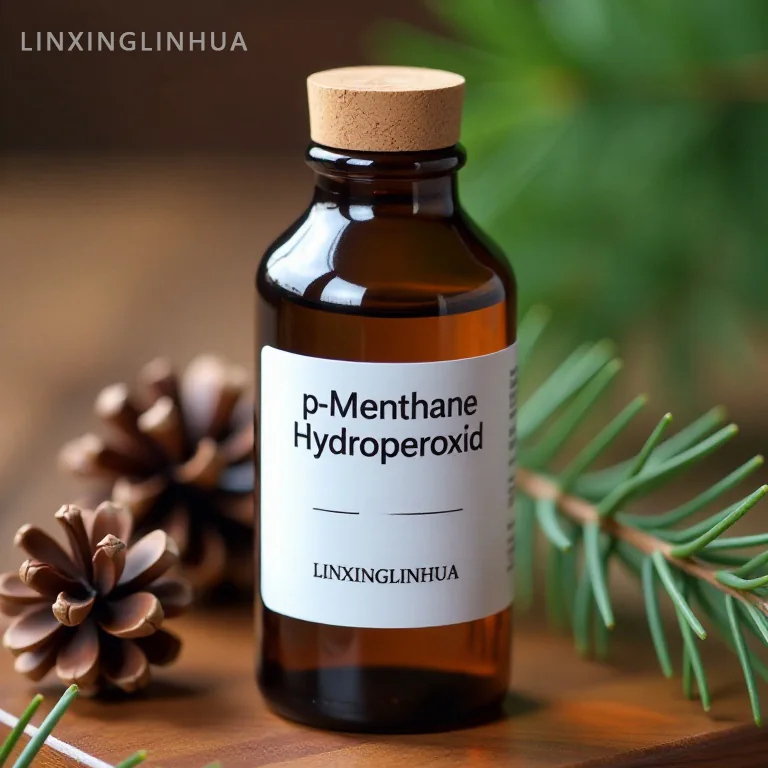
Understanding the Chemical Profile and Specifications
To appreciate the industrial value of this compound, it is essential to understand its chemical foundation. This compound is a synthetic aroma chemical derived through the sophisticated, deep processing of gum turpentine. As a derivative of natural pine chemicals, it represents an important bridge between botanical resources and advanced chemical synthesis, aligning with the growing industrial preference for renewable raw materials.
For industrial buyers, precision in specifications is non-negotiable. At our manufacturing facilities, we work to maintain that our product boasts the following precise characteristics, providing the consistency required for large-scale operations:
- Molecular Formula: C10H20O2
- Molecular Weight: 172.265
- Relative Density (D204): 0.956 g/cm³
- Boiling Point: 255.8 ℃ at 760 mmHg
- Flash Point: 53 ± 0.0 ℃
These distinct physical and chemical properties make the compound highly stable under controlled conditions while remaining reactive enough to serve its primary industrial functions. Our meticulous production process, utilizing fully automated PLC control systems, helps maintain consistent purity and performance across every single batch. We understand that in large-scale manufacturing, variations in raw materials can lead to significant production delays and quality issues, which is why we prioritize steady quality control.
The Core Function: Acting as a Catalyst and Initiator
While sometimes categorized within the realm of aroma chemicals due to its origin, the true industrial powerhouse application of Linxingpinechem’s p-Menthane Hydroperoxide lies in its role as a chemical initiator and crosslinking agent. In the realm of organic chemistry, an initiator is a substance that creates reactive species (free radicals) that start a chain reaction, which is fundamental to polymer production and modification.
Driving Organic Polymerization
The most prominent industrial application for this compound is its use as an initiator in organic polymerization. Polymerization is the critical process of reacting monomer molecules together in a chemical reaction to form polymer chains or three-dimensional networks. By introducing this specific hydroperoxide into the reaction, manufacturers can efficiently trigger the polymerization process, supporting the creation of various robust, polymer-based materials used in construction, automotive, and consumer goods. Its specific thermal stability profile makes it highly suitable for reactions requiring precise temperature controls, allowing for greater command over the final polymer’s characteristics.
Enhancing Unsaturated Polyesters as a Crosslinking Agent
Beyond initiating polymer chains, this chemical acts as a vital crosslinking agent, particularly for unsaturated polyesters. Crosslinking involves forming chemical bonds that link one polymer chain to another, fundamentally altering the physical properties of the material. When used in unsaturated polyesters, it significantly enhances the material’s structural integrity, mechanical strength, and chemical resistance. This application is heavily relied upon in the production of fiberglass, specialized resins, and advanced composite materials where long-term durability and performance under stress are critical requirements.
Formulating Fragrance Cure Materials
Although its structural and polymer applications are vast, it retains its roots as a synthetic aroma chemical. It is frequently incorporated into the formulation of specialized fragrance cure materials. In this capacity, it contributes distinct characteristics to the final aromatic profile, demonstrating its versatility across diverse manufacturing sectors, bridging the gap between heavy industrial applications and fine chemical formulations.
The Importance of a Secure Supply Chain
The performance of catalysts and initiators correlates closely with material purity and batch consistency. Impurities may bring about variable reaction rates, reduced polymer structural integrity, or undesired by product formation. For modern-day manufacturers, choosing a dependable supplier for this key raw material therefore represents a meaningful strategic supply-chain consideration.
When procuring materials derived from turpentine, the source of the raw gum rosin and the sophistication of the manufacturing process are the two primary factors determining quality. Manufacturers benefit from working with partners that maintain substantial oversight across their supply networks. Located in Yunfu City, Guangdong Province, a core regional hub for China’s gum rosin and turpentine output, we take advantage of our favorable geographic position to source premium-grade raw feedstock directly. Furthermore, handling organic peroxides requires specialized logistics. We package our product in new 200L plastic barrels with a net weight of 185kg, storing it under cool, dry, and well-ventilated conditions to protect efficacy and safety during transit.
Advancing Industrial Processes with Reliable Intermediates
Industry trends increasingly support materials that deliver two-fold advantages: sourcing from natural, renewable feedstocks while delivering solid chemical performance. The compound covered within this article illustrates this balance well. Whether deployed to kick-off complex polymer chain reactions, reinforce unsaturated polyesters via cross-linking, or refine fragrance formulations, it serves an important function across modern manufacturing workflows.
For businesses looking to optimize production using reliable catalysts and intermediates, building a stable supply-chain network stands as one high-priority consideration. When teams review detailed product specifications and collaborate with a seasoned, focused manufacturer like Linxingpinechem, businesses can leverage the full potential of these advanced chemicals to drive their production capabilities forward and maintain a competitive edge in their respective markets.