

Browse modern day personal-care retail shelves, and you will spot clear shifts in product messaging: terms such as “clean formula”, “plant-derived”, and “no synthetic fragrance” appear with growing frequency. Such evolving terminology mirrors broader upstream changes taking place at the raw-material sourcing phase, well ahead of finished goods reaching retail outlets. Formulators face growing expectations from retailers, regulatory bodies, and increasingly well-informed consumers to replace petrochemical-based aroma compounds with ingredients boasting traceable, renewable origins.
At Linxingpinechem, we have observed this industry shift firsthand among personal-care manufacturers. These partners seek citrus and pine-sourced terpenes that deliver consistent performance during manufacturing, alongside natural-origin credentials that align with the label narratives their audiences prefer.
The Push Toward Green Cosmetics Is Not a Passing Trend
Clean beauty spending has moved from a niche category to a mainstream expectation, with market researchers tracking double-digit annual growth across skincare, color cosmetics, and fragrance segments over the past several years, and some forecasts putting the category on track to multiply several times over within the decade. Much of that growth traces back to ingredient scrutiny: shoppers reading labels, avoiding parabens and synthetic musks, and gravitating toward brands willing to disclose where a scent actually comes from.
Natural fragrance specifically has become one of the faster-growing slices of that broader market, as cosmetic chemists look for citrus, pine, and floral-derived molecules that can replace lab-synthesized aroma compounds without losing performance or shelf stability.
Where Synthetic Fragrance Runs Into Trouble
Synthetic fragrance blends often carry proprietary formulas that brands are not required to disclose in full, which has made “fragrance” one of the more distrusted words on a cosmetic ingredient list, especially among shoppers with sensitive skin or a history of contact allergies.
Regulators have responded too: under EU cosmetic rules, a set of individual fragrance allergens, including limonene, must be listed by name once concentration crosses a defined threshold, rather than sitting hidden inside a generic “parfum” entry. That regulatory push toward transparency plays directly to the strengths of naturally sourced terpenes, since their composition and botanical origin are far easier to document and trace back to a single feedstock instead of a multi-step synthetic pathway involving several intermediate reactions.
Limonene: A Natural Fragrance Ingredient Built for Green Cosmetics
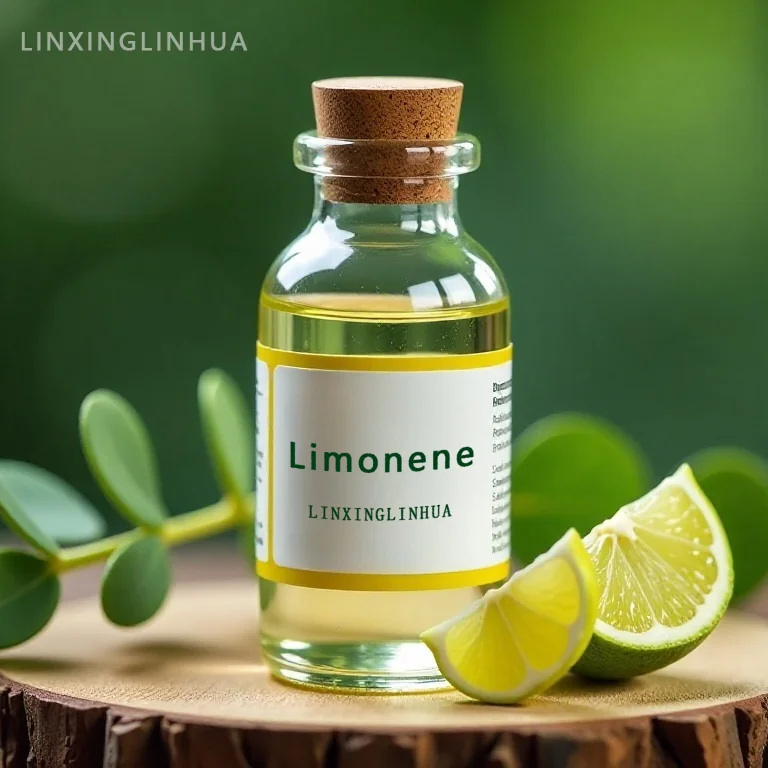
This is where L-Limonene earns its place on a formulator’s shortlist. Distilled from citrus-bearing plant sources, it appears as a colorless to orange-yellow transparent liquid carrying a lemon-like odor, with a molecular formula of C10H16, a molecular weight of 136.23, and CAS No. 5989-54-8. Our specification sheet lists a relative density of 0.838–0.880 (D20/4), a purity of 95% or higher by GC, and a refractive index of 1.471–1.480 (N20), figures that let formulators calculate dosing and predict how the material will behave once blended with other actives in a batch. In finished products, L-Limonene lends a fresh citrus top note to perfumes, body lotions, and shampoos, while also serving as a synthesis resin and flotation agent in broader fine-chemical applications, which gives cosmetic buyers a supplier with cross-industry manufacturing depth standing behind a single drum.
A Supplier Rooted in the Same Renewable Chemistry
Our production base sits in Guangdong’s industrial belt, where we’ve processed pine and turpentine-derived raw materials since 1998, growing from a single rosin production line into a facility running dedicated processing streams for terpineol, longifolene, isolongifolene, and related pine chemical products. That history matters for a formulator vetting a natural fragrance source, because renewable sourcing works best when it’s backed by a supplier who controls the upstream distillation process rather than reselling material of uncertain origin. Buyers get access to an in-house lab equipped with GC analysis instruments and staff trained to run consistency checks across every production batch, along with senior engineers who provide technical guidance when a formulation calls for a closer look at a specific terpene profile.
What to Look For When Sourcing a Natural Fragrance Supplier
Specification numbers only tell part of the story; consistency batch to batch matters just as much for a formulator running a production schedule months in advance. We package L-Limonene in new 200L or 235L galvanized iron drums, at a net weight of 175kg or 190kg, and recommend storage indoors in a cool, dry, ventilated space, away from open flame and direct sunlight, with care taken during transport to keep the drums free of water ingress and rough handling.
Every shipment ships alongside MSDS documentation, and our technical team stays available to help customers work through compatibility questions when a new terpene is being introduced into an existing formula. As a producer built on pine forestry byproducts rather than purely synthetic pathways, we’re positioned to keep raw material costs more stable for buyers scaling a green cosmetics line across multiple markets and regulatory regions.
Formulating Green Cosmetics That Hold Up Under Scrutiny
Green cosmetics have moved beyond being a niche marketing talking-point, evolving into a baseline expectation that guides R&D teams when they evaluate raw-material options throughout product development. Citrus and pine-sourced terpenes offer formulators a well-documented renewable alternative to synthetic aroma chemicals. Buyers partnering with suppliers who can back natural fragrance for cosmetics with concrete specification datasets, MSDS documentation, and steady production capacity can generally navigate product launch schedules, regulatory assessments, and reformulation cycles with fewer unforeseen obstacles.
We continue to scale our production infrastructure around such market requirements. This gives cosmetic manufacturers developing their next clean-label release a raw-material partner familiar with both underlying chemical principles and the compliance related pressures shaping this market segment.