

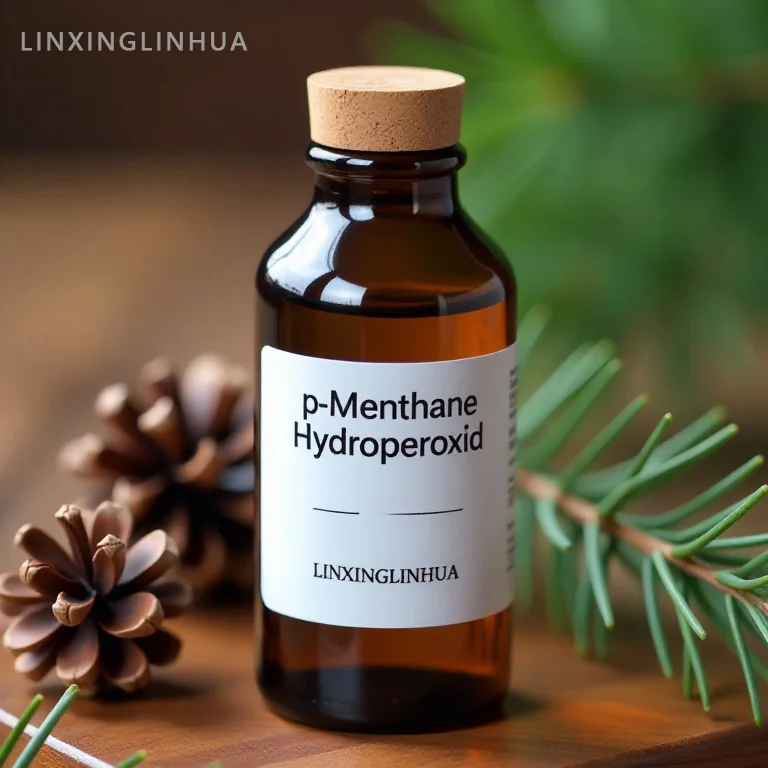
Synthetic rubber production depends on controlled polymerization, and that makes the choice of chemical intermediates important. Turpentine does not simply enter a rubber formulation as a finished ingredient. Its significance comes from its role as a renewable pine-derived feedstock that can be processed into chemicals used in polymer production. One important example is P-Menthane Hydroperoxide, which is documented as a polymerization initiator and has been studied in styrene-butadiene rubber systems.
The connection gives refined turpentine a place within a broader value chain: pine-derived material is processed into more defined chemical intermediates, and those intermediates can perform a specific function in polymerization. Understanding that pathway helps rubber manufacturers evaluate raw-material sourcing more intelligently.
The Link Between Turpentine and Rubber Chemistry
Turpentine is not the polymerization initiator itself. Its importance begins upstream, where it can serve as a source for further chemical processing. We at Linxingpinechem state that our P-Menthane Hydroperoxide is produced through the deep processing of turpentine. We describe the resulting material as suitable for several applications, including organic polymerization initiation.
That distinction is important for technical buyers. A raw pine-derived feedstock and a finished polymerization chemical have different functions. Refining and downstream processing can convert a relatively broad raw material into a more specific intermediate with a defined chemical role.
The value therefore lies in the transformation rather than in simply adding turpentine to rubber. A controlled supply chain can connect a pine-derived starting material with a chemical that is directly relevant to polymer production.
How P-Menthane Hydroperoxide Enters the Process
P-menthane hydroperoxide is particularly relevant because it is identified as an organic polymerization initiator. We at Linxingpinechem also describe it as a crosslinking agent for unsaturated polyester, showing that its functionality extends beyond a single industrial pathway.
Published polymer research provides a more specific rubber connection. A study in the Journal of Polymer Science evaluated P-Menthane Hydroperoxide as a control hydroperoxide in low-temperature styrene-butadiene rubber polymerization. Another research study used the compound with ferrous sulfate to initiate graft polymerization involving styrene-butadiene rubber.
These examples explain why the upstream feedstock deserves attention. Once turpentine has been converted into a functional hydroperoxide intermediate, the material is no longer being evaluated merely as a natural raw material; it is being considered according to its role in a controlled polymerization system.
Why Feedstock Quality Matters Downstream
A downstream polymerization process depends on the characteristics of the chemicals introduced into it. For that reason, manufacturers generally need to distinguish between a broad feedstock description and a defined intermediate with documented properties.
We at Linxingpinechem publish relative density, boiling point, and flash point for our P-Menthane Hydroperoxide: 0.956 g/cm³, 255.8°C at 760 mmHg, and 53 ± 0.0°C, respectively. These values provide technical reference points for our supplied intermediate; they should not be interpreted as universal specifications for every P-Menthane Hydroperoxide product.
That principle is relevant when refined turpentine is evaluated as part of a larger sourcing strategy. Buyers should focus on the documented characteristics of the downstream chemical required by their process rather than assuming that all turpentine-derived materials will behave identically.
Where the Rubber-Polymerization Connection Becomes Important
Synthetic rubber production can involve emulsion polymerization, and hydroperoxides can function within initiator systems. Historical and research literature specifically documents P-Menthane Hydroperoxide in SBR-related polymerization work. One published study evaluated it in low-temperature SBR polymerization, while another used it in an isoprene-grafting system involving SBR.
The practical implication is that the pine-chemical value chain can reach beyond traditional fragrance and solvent markets. A material derived from turpentine can become part of a chemical route supplying an intermediate used in polymer-related chemistry.
We at Linxingpinechem describe our P-Menthane Hydroperoxide as derived from turpentine and specifically list organic polymerization initiation among its applications. This provides a direct commercial connection between pine-derived processing and polymer-industry chemistry, without suggesting that turpentine itself performs the same function as the finished initiator.
What Manufacturers Should Evaluate in the Supply Chain
Rubber manufacturers and chemical buyers should separate three questions: where the material originates, what chemical transformation it has undergone, and what properties the resulting intermediate possesses.
Origin establishes the feedstock pathway. Processing determines how that feedstock becomes a more specialized chemical. The final specification then determines whether the supplied intermediate corresponds with the requirements of the intended process.
For P-Menthane Hydroperoxide, documentation is therefore more useful than a general statement that the product is “pine derived.” Buyers can review the stated identity, physical properties, packaging, storage conditions, and intended applications. Linxingpinechem specifies 200 L plastic barrels with a net weight of 185 kg and recommends cool, dry, well-ventilated storage away from direct sunlight.
Why Refining Creates More Value Than a Raw Feedstock
The importance of turpentine in synthetic rubber chemistry is ultimately tied to value-added conversion. Rather than viewing pine-derived material only as an undifferentiated natural resource, downstream processing can turn it into intermediates with more specific industrial functions.
For rubber-related applications, P-Menthane Hydroperoxide demonstrates that pathway particularly clearly. Research has documented its use in SBR polymerization systems, while the supplied product information identifies it as a polymerization initiator and confirms its production through deep processing of turpentine.
At Linxingpinechem, we supply P-Menthane Hydroperoxide as a processed intermediate within this pine-chemical chain. For buyers, the key takeaway is not that all turpentine products suit rubber production, but that controlled processing can link turpentine to specialized chemicals with documented roles in synthetic polymer chemistry.
Evaluating turpentine within the rubber supply chain requires looking beyond the original feedstock. The meaningful technical question is what defined intermediate the material can support and whether that intermediate has the documented properties and polymerization function required by the manufacturing process.